Key takeaways
- Performance polyester polos wick sweat and hold sublimation; cotton pique polos feel classic and take embroidery beautifully.
- Collar construction, placket style and fabric weight decide whether a polo still looks sharp after a season of washing.
- Embroidery suits chest logos on both fabrics; sublimation only works on light polyester.
- Staff and team programmes benefit from a fixed specification so reorders match the original batch.
- ProXen produces custom polos from one sample, with bulk around 14 days after approval and courier delivery worldwide.
Where a custom polo shirt manufacturer fits in your uniform programme
The polo is the most versatile shirt in sport and business. Coaches wear it on the sideline, golf clubs sell it in the pro shop, event crews wear it at tournaments and companies hand it to staff on day one. Because it serves so many roles, the choice of a custom polo shirt manufacturer comes down to one question: which fabric and construction suits the way your people will actually wear it?
ProXen Apparel makes custom polo shirts in Lahore, Pakistan for overseas teams, golf brands, promotional companies and corporate buyers. Below we compare performance and cotton pique polos, explain the construction details that matter, and set out how ordering works.
Performance polos vs cotton pique polos
Both look like a polo at ten paces. Up close and after a day of wear, they behave very differently.
| Feature | Performance polo | Cotton pique polo |
|---|---|---|
| Typical fabric | Polyester or poly/elastane knit, approx. 140-180 gsm | Cotton or cotton-rich pique, approx. 180-240 gsm |
| Feel | Smooth, light, slight stretch | Textured, soft, structured |
| Moisture | Wicks and dries quickly | Absorbs sweat, dries slower |
| Decoration | Embroidery, heat transfer, DTF, full sublimation on light colours | Embroidery, screen print, DTF |
| Wrinkles and shrinkage | Low | Higher; pre-shrunk fabric recommended |
| Best for | Coaches, golf, outdoor events, hot climates | Corporate staff, hospitality, retail, club merch |
When performance wins
Outdoor coaching, golf rounds, summer tournaments and staff in hot climates such as the UAE all favour polyester. It also allows full sublimation, so team polos can carry stripes and sponsor marks that match the playing kit.
When cotton pique wins
Indoor staff, front-of-house teams and corporate gifts usually look better in cotton pique. Its texture gives a premium look and embroidery sits crisply on it. Blends such as cotton/polyester pique reduce shrinkage and fading while keeping the cotton feel.
Construction details that separate good polos from cheap ones
Specifying these details in your tech pack keeps every reorder identical, which is critical for staff uniforms that are topped up a few times a year.
- Collar: a flat-knit rib collar keeps its shape; self-fabric collars are softer and suit performance styles. Ask for collar stays or a firmer knit if you want a crisp golf look.
- Placket: two or three buttons, a hidden snap, or a short zip on sport polos. A reinforced placket base stops tearing at the bottom stitch.
- Tipping: contrast stripes knitted into the collar and cuffs in team or brand colours.
- Sleeves: rib cuffs for classic styles, hemmed raglan sleeves for athletic movement.
- Hem: straight hem for untucked wear, or a dropped back tail for golf and tucked uniforms, often with side vents.
- Taping: neck tape and side-seam tape improve comfort and durability.
Logo options on custom polo shirts
Embroidery is the default for polos because it looks professional on both fabrics and lasts as long as the shirt. A left-chest logo of roughly 7 to 10 cm wide is standard; sleeve and back-yoke embroidery add club or sponsor marks. On lightweight performance fabric, ask for a lighter stitch count and a tear-away or soft backing so the area does not pucker.
Other options include DTF or heat transfer for multi-colour logos, screen printing on cotton for larger back prints, and full sublimation on light polyester for team designs. Private label buyers can add woven neck labels, printed care labels and hang tags so polos are ready for retail or pro-shop shelves.
Before bulk, approve an embroidery sew-out on the real fabric colour. Thread colours are matched to your Pantone references, and very small text, usually anything under about 5 mm tall, is often redrawn or simplified so it stays legible in stitches. For corporate buyers with several departments, the same base polo can carry different sleeve embroidery per team without changing the main specification.
Polos for teams, coaches, golf and staff
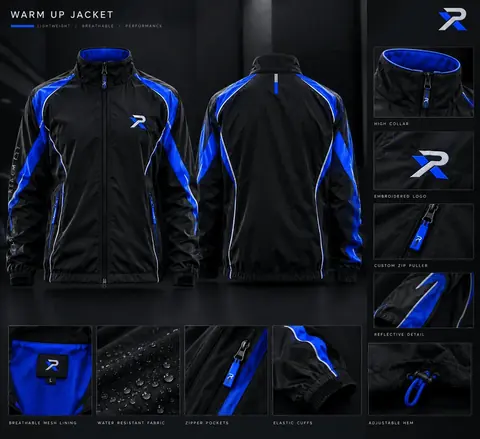
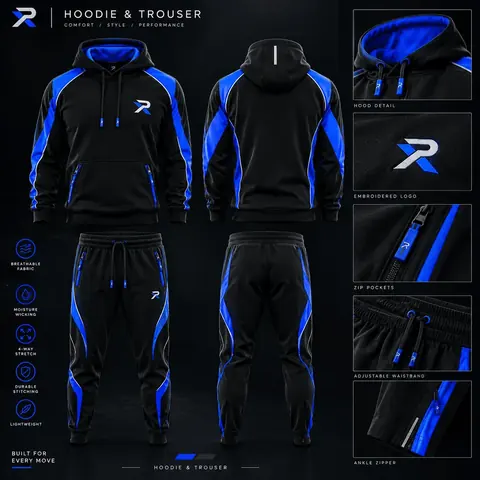
Many teams combine polos with training hoodie and trouser sets and team warm-up jackets for a full staff and coaching wardrobe.
- Teams and coaches: performance polos that match the playing kit, often worn with warm-up jackets on cool match days.
- Golf: stretch performance polos with a longer back hem and subtle embroidery; club logo on the chest, sponsor on the sleeve.
- Corporate events and promo: cotton or blend polos in brand colours, embroidered, with a clear size run for staff and volunteers.
- Staff uniforms: pique polos in a fixed specification for hospitality, retail and clinics, reordered through the year.
Checklist for choosing a polo shirt manufacturer in Pakistan
Pakistan's cotton supply and knitting base make it a natural source for pique and jersey fabrics, and its sportswear sector is used to polyester performance knits. Before choosing a supplier, confirm:
- Fabric composition and gsm are stated in writing and match the sample.
- Collar and cuff tipping can be knitted to your Pantone colours.
- Embroidery is digitised in-house and checked on the actual fabric.
- Shrinkage is tested on cotton pique before bulk.
- Reorders can be made to the same spec months later.
Care, colourfastness and reorders
A polo programme lives or dies on how the shirts look after twenty washes. Cotton pique should be made from pre-shrunk fabric and tested for shrinkage at sample stage; reactive-dyed cotton holds colour better than cheaper dye methods, especially in navy, black and red. Performance polyester resists fading and shrinkage, but low-quality fabric can pill on the underarm and side seams, so check the fabric after a few wash cycles.
For staff uniforms, keep a signed-off golden sample and a written spec covering fabric, gsm, collar knit, button type and logo size. When you reorder months later, the factory produces against that record, so new starters receive shirts that match colleagues already wearing the first batch. Including a printed care label with wash temperature and drying advice also helps staff keep uniforms looking fresh.
Why buyers choose ProXen for polos
ProXen is a manufacturer and exporter working only with overseas buyers. We take tech packs, match Pantone colours, embroider and print in-house, and pack each order with your labels and poly bags. Sizes run XXS to 5XL plus youth, which suits mixed staff teams and junior golf. Explore the sportswear range and our guide to the best sportswear manufacturer in Pakistan.
Ordering polos: sample, MOQ and delivery
Start with one sample polo in your fabric and logo. Overseas buyers can also order 1 or 2 pieces paid in USD and delivered to their door. Bulk usually starts from around 25 pieces per design with mixed sizes, and production takes about 14 days after sample approval. Express DHL or FedEx generally arrives 4 to 7 working days after dispatch; larger staff programmes can ship by air cargo or sea.
We ship to the USA, Dubai and the UAE, Canada, the UK and Australia with export documents prepared and DDP quotes on request. Price depends on fabric, decoration and quantity. Request a quote with your logo and size breakdown, and we reply within 24 hours.
Frequently asked questions
What should I ask a custom polo shirt manufacturer before ordering?
Ask for fabric composition and weight, collar construction, embroidery placement and size, and a physical sample before bulk.
Are performance or cotton polos better for staff uniforms?
Cotton or cotton-blend pique suits indoor and corporate staff, while performance polyester is better for outdoor roles, sport and hot climates.
Can you embroider our logo on the polos?
Yes. Embroidery is our most popular polo decoration, usually on the left chest, with sleeve or back-yoke options.
Can collar tipping match our brand colours?
Yes, collar and cuff tipping can be knitted to your Pantone references.
What is the minimum order for custom polos?
One sample to start, 1 to 2 pieces for overseas buyers, and bulk from around 25 pieces per design with mixed sizes.
How long does production take?
About 14 days after sample approval, plus 4 to 7 working days by express courier. Get a quote for exact timing.
Ready to manufacture custom polo shirt?
Send your design or idea — we reply with fabrics, pricing and a sample plan within 24 hours. Overseas buyers can start with a single sample.